Top 7 of Europe’s most beautiful cities
Colmar, France
France and Germany put together their best features in the Alsatian village. Here bake delicious croissants and restaurants prepare the best foie gras and brand sauerkraut.
World War spared the town side, keeping the variety of architectural styles, from Gothic to Baroque. Paved paths, quiet canals and old brick houses will please fans of European antiquity.
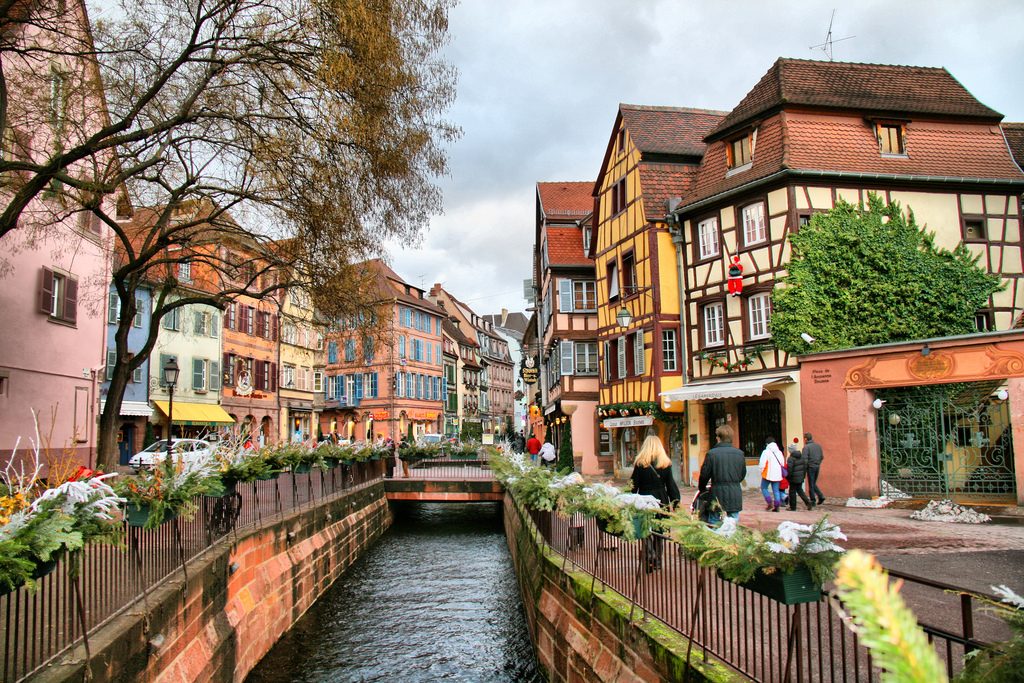
Colmar is the third-largest commune of the Alsace region in north-eastern France. It is the seat of the prefecture of the Haut-Rhin department and the arrondissement of Colmar-Ribeauvillé.
The town is situated on the Alsatian Wine Route and considers itself to be the “capital of Alsatian wine”. The city is renowned for its well preserved old town, its numerous architectural landmarks and its museums, among which is the Unterlinden Museum with the Isenheim Altarpiece.
Colmar was founded in the 9th century, and is mentioned as Columbarium Fiscum by the monk Notker Balbulus in a text dated 823. This was the location where the Carolingian Emperor Charles the Fat held a diet in 884. Colmar was granted the status of a free imperial city by Emperor Frederick II in 1226. In 1354 it joined the Décapole city league. In 1548 Josel of Rosheim urged the Reichskammergericht court to repeal the Colmar market ban on Jewish merchants.The city adopted the Protestant Reformation in 1575, long after the northern neighbours of Strasbourg and Sélestat. During the Thirty Years’ War, it was taken by the Swedish army in 1632, who held it for two years. In 1635 the city’s harvest was spoiled by Imperialist forces while the residents shot at them from the walls.


